Routine
Ingrown Hair Shaving Routine for Neck Bumps
Start With the Neck Grain
Ingrown hair shaving starts with a growth map: check which way the neck hair points, then plan each stroke with that direction instead of chasing the closest feel.
The American Academy of Dermatology tells shavers to figure out hair-growth direction before shaving. The neck deserves extra attention because hair under the jaw can change direction across a small area.
Use a mirror before lather goes on. Tilt the chin up, look at the left neck, right neck, and area under the jaw, then choose the stroke direction for each zone.
Soften Stubble Before Any Blade
Warm water, a mild cleanser, and shaving cream or gel give coarse neck hair time to swell, which lowers tugging and helps the blade move without extra pressure.
Mayo Clinic recommends washing with warm water and a mild facial cleanser, then applying lubricating shaving cream or gel before shaving. A warm damp cloth can also soften the area.
Do this before picking up the razor. If the cream dries, rinse and reapply it instead of pushing a blade across dry product.
Choose the Least-Close Clean Tool
The best tool is the one that leaves the neck presentable without cutting hair so short that sharp tips curve back into the skin.
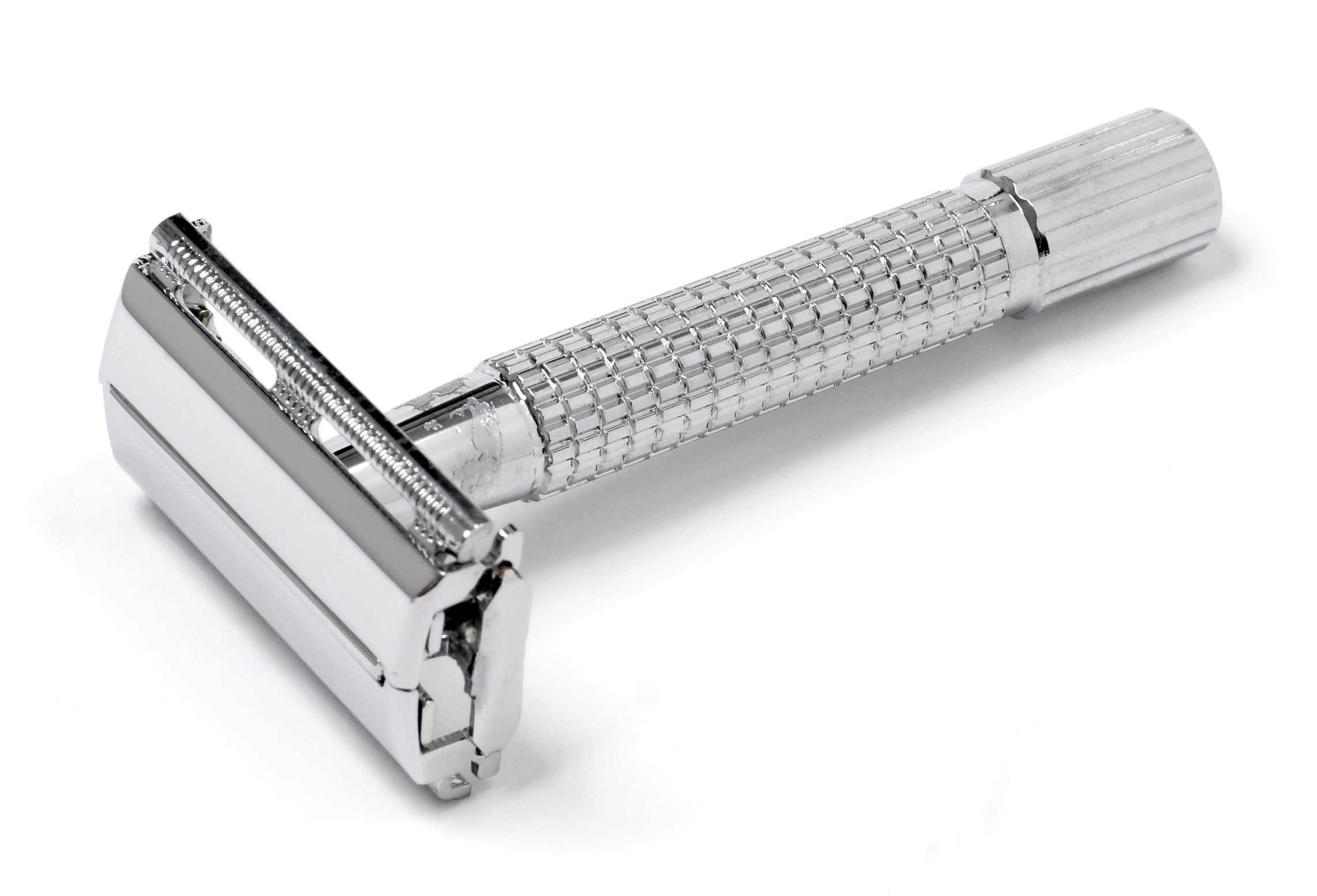
Use a single-blade safety razor when you want wet-shave control and can keep pressure light. Mayo Clinic lists a sharp single-blade razor as one way to avoid a too-close shave.
Choose an electric razor or clippers when close shaving keeps causing bumps. Mayo Clinic advises avoiding the closest setting and holding electric tools slightly away from the skin, while DermNet notes that switching from blade shaving to an electric shaver can help some pseudofolliculitis barbae cases.
Keep Passes Short and With the Grain
A neck routine for razor bumps should use short strokes, light pressure, blade rinses, and one or two with-grain passes before the skin starts to feel hot.
Mayo Clinic and AAD both recommend shaving in the direction of hair growth. DermNet adds practical limits: avoid stretching the skin, use short strokes, and avoid shaving the same area twice.
Skip the against-grain finish on the bump-prone part of the neck. A closer finish can look better for a few hours, but the article goal is fewer trapped tips after the hair starts growing back.
Cool the Skin and Know When to Pause
Aftercare works best as a cooling step and a barrier step, not as a way to erase damage from a rushed shave.
Mayo Clinic recommends rinsing the skin after shaving, applying a cool wet cloth for about five minutes, and then using a soothing after-shave product. AAD also recommends a soothing aftershave made for razor-bump risk and irritation.
Pause close shaving if the same area keeps swelling, bleeding, forming pus, or leaving dark marks. Mayo Clinic advises medical care when ingrown hair does not clear or causes regular problems.
Build the Raznox Shave Setup
A practical Raznox shave setup pairs the Shave collection with a safety razor, shave cream, and a starter kit when you want one routine instead of loose tools.
Start with the Raznox Shave collection to compare the full shave lane. Use the Raznox Safety Razor for single-blade control, Raznox Shave Cream for glide, and the Raznox Shave Kit when you want the razor, prep, and aftercare pieces in one path.
The product decision still follows the same rule: choose the tool that keeps your neck clean enough while leaving enough stubble to lower the chance of trapped hair tips.
Frequently asked questions
Is a safety razor better for ingrown hair shaving?
A safety razor can help when you use a sharp single blade, light pressure, and with-grain strokes. It can still irritate skin if you chase a very close neck shave.
Should I shave against the grain on my neck?
For bump-prone neck skin, start with the grain and stop before the skin feels hot. Dermatology sources link against-grain or too-close shaving with more irritation risk.
How often should I replace a shaving blade?
AAD guidance recommends changing disposable razors after 5 to 7 shaves. Replace safety razor blades sooner if they tug, scrape, or require added pressure.
Can aftershave remove razor bumps?
Aftershave can calm the surface after shaving, but it cannot replace growth mapping, light pressure, or medical care for infection signs. Stop any product that burns or stings.
When should I stop shaving and see a dermatologist?
Seek medical advice when bumps keep returning, do not clear, hurt, show pus, or leave scarring or dark marks. A dermatologist can check for ingrown hairs, folliculitis, or another condition.
